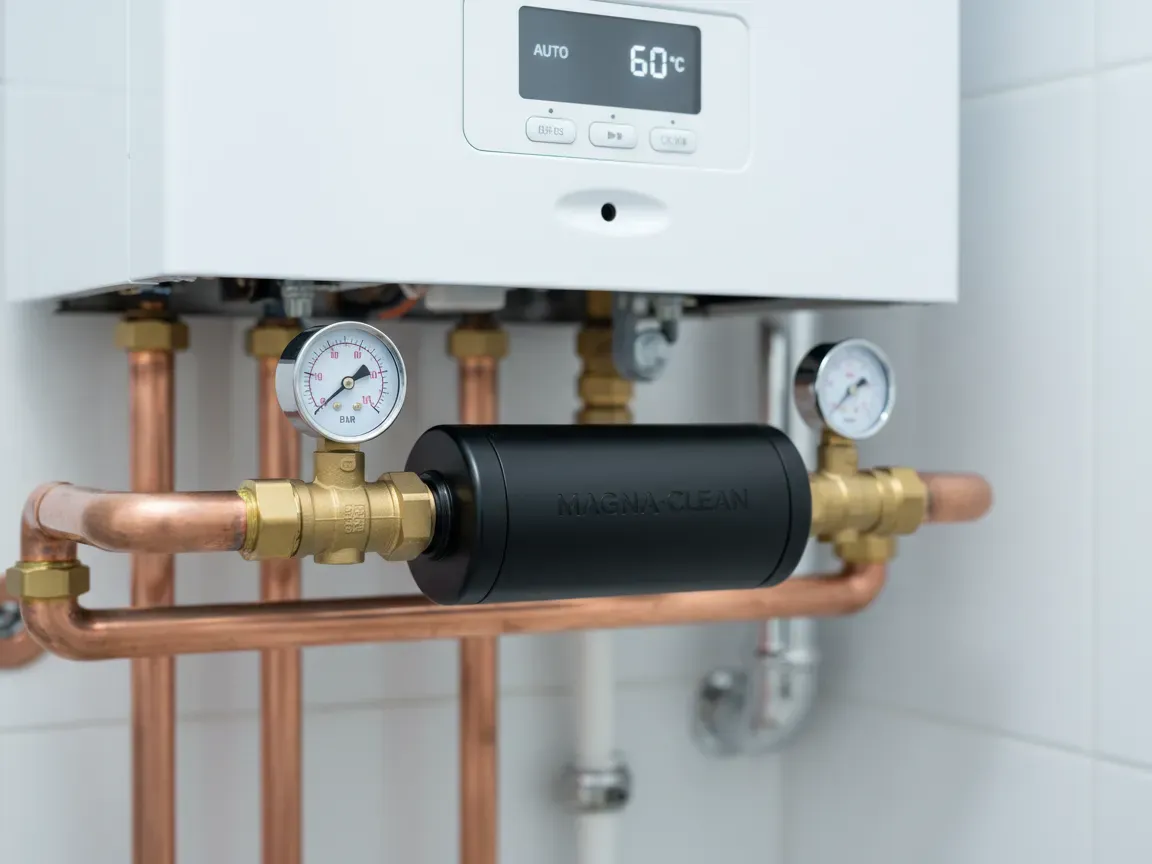
Modern architectural engineering places tremendous emphasis on sustainability, tight building envelopes, and high-efficiency mechanical systems. Contemporary properties rely on sophisticated condensing boilers, advanced hydronic heat distribution networks, and intricate control valves designed to squeeze every ounce of thermal performance from consumed energy. However, these advanced heating setups operate with tight tolerances, making them exceptionally vulnerable to an age-old mechanical threat: internal system contamination.
While property developers and facility managers often prioritize exterior insulation and smart thermostats, the unseen fluids circulating through internal piping dictate the actual operational lifespan of the heating infrastructure. Integrating an inline magnetic filtration unit has shifted from an optional enhancement to an indispensable component of long-term building preservation.
Why modern heating systems face internal debris risks?
Contemporary hydronic loops are closed systems, yet they are not inert environments. The mixture of water, residual dissolved oxygen, and various metals such as steel radiators, copper pipework, and brass fittings creates a prime environment for electrochemical corrosion. Over time, internal oxidation breaks down ferrous components, transforming solid metal surfaces into microscopic particles of black iron oxide, widely known as magnetite sludge.
In older, low-efficiency heating arrangements, heavy cast-iron boilers featured spacious waterways capable of tolerating substantial amounts of settled sediment. Modern systems present the exact opposite environment. Today’s high-efficiency condensing boilers utilize narrow heat exchanger channels to maximize thermal transfer rates in compact physical footprints. When magnetite sludge circulates freely through the distribution loop, it settles within these tight passageways, creating insulating layers that restrict water flow and trigger localized overheating.
Furthermore, modern variable-speed circulation pumps utilize permanent magnet rotors to achieve minimal electrical consumption. Unfortunately, these powerful internal magnets naturally attract circulating metallic debris directly into the pump housing. Without proactive interception, accumulated sediment causes impeller wear, motor strain, and premature mechanical breakdown across newly installed hydronic loops.
How magnetic technology captures damaging metallic sludge?
Unlike traditional mesh strainers that only trap large debris particles and frequently clog, magnetic filtration operates on an entirely different hydrodynamic principle. A high-grade magnetic separator features an internal core of powerful neodymium magnets positioned directly within or adjacent to the primary water stream. As heating system fluid passes through the filtration chamber, the magnetic field exerts continuous force on suspended ferrous particles.
Because black iron oxide is strongly magnetic, even microscopic particles measuring just a few microns across are drawn out of suspension and firmly bound to the central magnet assembly. The non-restrictive design ensures that water continues to flow without experiencing substantial pressure drops, allowing the circulating pump to operate smoothly at its intended design parameters. Investing in a reliable magnetic filter for boilers provides an active defense line that captures debris before it ever reaches delicate internal heat exchangers or precision balancing valves.
During routine seasonal maintenance, technicians can isolate the filter assembly, withdraw the magnetic core, and flush the captured sludge away through an integrated drain valve in minutes. This straightforward servicing process permanently removes corrosive matter from the property rather than allowing it to break down further and redeposit elsewhere in the piping.
Key efficiency advantages for contemporary property managers
Energy efficiency benchmarks dictate property valuation, regulatory compliance, and tenant satisfaction. When magnetite deposits accumulate inside baseboards, radiators, and underfloor manifolds, they act as an unintended thermal barrier. A layer of sludge measuring only a fraction of an inch thick can reduce heat transfer efficiency significantly, forcing the central boiler to burn more fuel to satisfy the ambient temperature setpoints.
By keeping internal surfaces clear of metallic film, magnetic filtration preserves the precise thermal conductivity engineered into modern heat exchangers. Systems maintain their rapid warm-up times, and heat emitters deliver balanced thermal comfort across every zone in the building. Consequently, facilities burn less fuel, lower their operational carbon footprint, and achieve consistent seasonal performance metrics without requiring excessive boiler cycling.
For commercial portfolio managers and multi-family residential operators, this thermal optimization translates directly into predictable utility expenses. Eliminating internal sludge buildup prevents cold spots in distant zones, preventing unnecessary tenant complaints and avoiding the need to artificially elevate supply water temperatures just to satisfy sluggish heating circuits.
Lowering maintenance costs and extending heating system lifespan
Emergency mechanical interventions represent a significant drain on facility budgets. The failure of a primary circulating pump or a cracked condensing heat exchanger often necessitates costly replacement parts, specialized labor, and uncomfortable downtime for building occupants. Magnetite contamination ranks among the leading primary causes behind these premature component failures.
When abrasive iron oxide particles circulate at high velocities, they scour the internal surfaces of pipes, erode diverter valve seats, and seize motorized zone controls. Incorporating magnetic filtration removes these abrasive solids, shielding mechanical seals and sensitive moving parts from persistent wear. The result is a dramatically stabilized hydronic loop that demands far fewer emergency service calls.
Preventative filtration also protects the validity of manufacturer warranties. Many leading boiler manufacturers now mandate the inclusion of an approved magnetic filter as a baseline condition for extended equipment coverage. Facilities that document proper filter installation and annual cleaning routines safeguard their capital investments and avoid contentious warranty claim rejections when repairs do arise.
Installation practices for newly constructed buildings
Optimal filtration performance depends on deliberate placement during the mechanical rough-in phase of construction. Industry best practice places the magnetic separator on the primary return pipework, directly upstream of the boiler intake. Positioning the device here guarantees that all circulating water returning from the distribution network gets thoroughly scrubbed of metallic contaminants before re-entering the heat exchanger or system pump.
Designers must also account for physical accessibility. Placing the filtration unit in an open, reachable section of the mechanical room ensures that maintenance teams can inspect and flush the chamber without dismantling surrounding ductwork or electrical conduits. Adding full-port isolation valves on both sides of the filter allows service personnel to perform annual cleanouts without draining large volumes of treated hydronic water from the entire building.
For complex commercial buildings featuring multiple heating zones or hybrid configurations with heat pumps, secondary magnetic separators placed on primary-secondary decoupling loops or low-loss headers offer comprehensive coverage. Combining magnetic capture with chemical corrosion inhibitors delivers a layered defense that preserves pipe integrity across decades of continuous operation.
Ways to ensure lasting protection for your heating investment?
Maximizing the operational lifespan of a modern heating installation requires combining magnetic filtration with rigorous hydronic hygiene protocols. Prior to commissioning any new heating plant, technicians must thoroughly flush the complete pipe network to eliminate installation residues, flux, and metal shavings generated during construction. Introducing high-performance chemical inhibitors directly into the clean system water subsequently pacifies raw metal surfaces and slows down baseline oxidation rates.
Routine annual maintenance programs should treat filter servicing as an essential operational milestone alongside burner tuning and flue gas analysis. Discharging captured magnetite into a test bucket provides technicians with immediate physical feedback regarding internal corrosion rates, serving as an early diagnostic indicator if chemical levels drop or oxygen ingress occurs.
Incorporating dedicated filtration hardware fundamentally secures the mechanical reliability of modern properties. Protecting sophisticated heating assets from abrasive internal contamination preserves designed energy ratings, reduces long-term maintenance burdens, and ensures dependable thermal comfort throughout every heating season.