Why residential privacy begins with the right perimeter barrier?
Designing a peaceful residential exterior requires thoughtful boundaries that frame the property while establishing personal space. A primary home functions as a private sanctuary, yet open sightlines from adjacent properties or passing street traffic can detract from that quiet atmosphere. Installing a dependable timber perimeter serves as the architectural foundation for backyard seclusion. Beyond establishing physical property lines, a solid barrier creates an acoustic dampener that softens neighborhood noise and establishes a sheltered microclimate favorable for outdoor living.
Every residential lot presents distinct spatial dynamics. Narrow suburban yards frequently demand robust physical screening to shield patios and entertainment zones from second-story neighbor windows. Larger parcels often require perimeter delineation that balances visual security with a welcoming visual aesthetic. Selecting premium wooden garden fence panels allows homeowners to cultivate an enclosed outdoor retreat that integrates naturally with existing landscaping, exterior architectural siding, and stone hardscaping.
Evaluating panel styles for sightline blockage and wind resistance
The construction style of your fencing dictates how effectively it obstructs sightlines while withstanding seasonal weather patterns. Fully solid designs, such as traditional closeboard or tongue and groove assemblies, provide continuous vertical timber coverage without gaps. These designs offer complete visual seclusion, making them optimal for shielding swimming pools, ground-level hot tubs, or ground-floor bedroom windows. Because solid timber barriers act as wind sails during severe weather events, they require robust structural anchoring to withstand high wind loads.
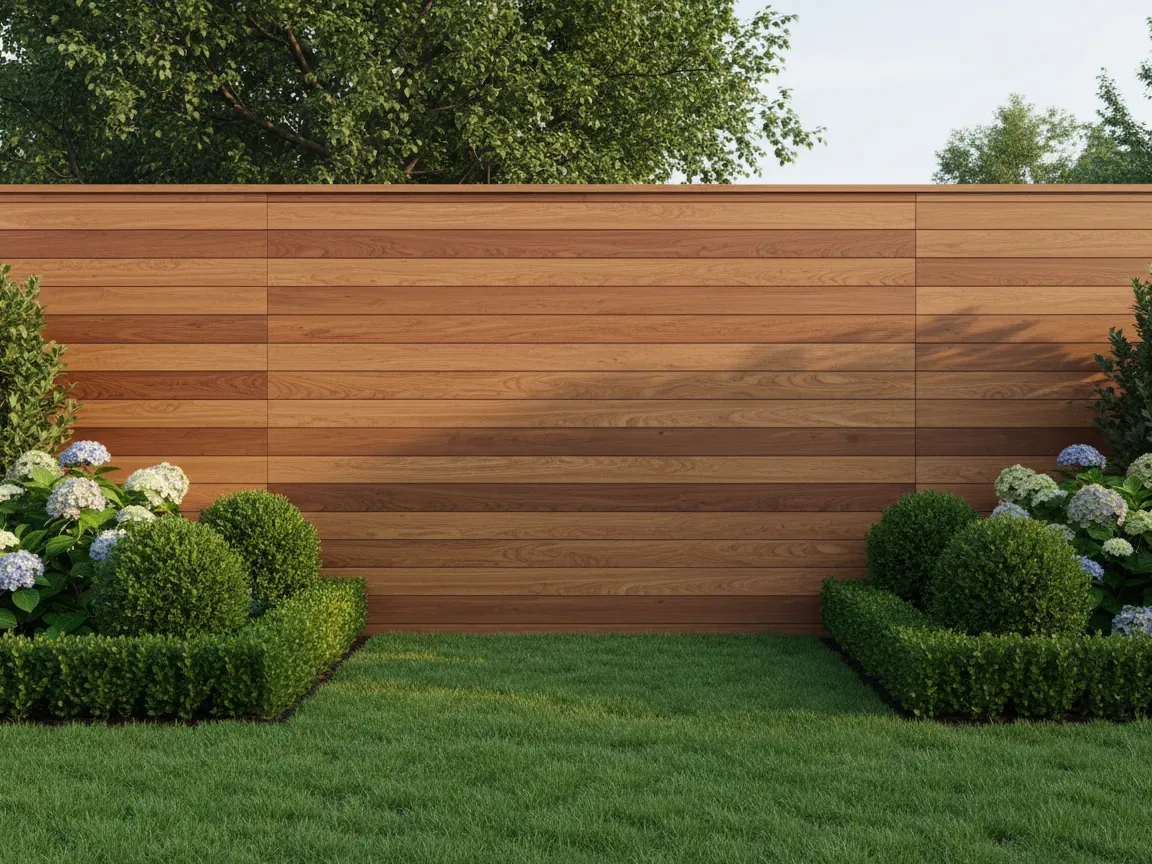
For wind-exposed yards, contemporary horizontal slatted profiles or woven hit and miss patterns present a compelling alternative. Hit and miss construction arranges timber boards alternately on the front and back of horizontal battens, creating an overlapping framework. This configuration breaks direct sightlines from straight-on vantage points while permitting moderate airflow to filter through the barrier. The resulting reduction in wind resistance significantly lowers pressure against support posts during winter storms, preventing structural leaning without sacrificing everyday privacy.
Selecting durable lumber types and pressure treatments
The longevity of any timber fence rests fundamentally upon the quality of the raw lumber and the preservation techniques applied during manufacturing. Softwoods like pine and spruce represent common choices due to their affordability and straightforward handling. These wood varieties possess open cellular structures that readily accept industrial preservatives. Premium cedar provides inherent resistance to insect damage and decay due to natural thujaplicins in its grain, though it typically demands a larger initial investment than standard pine.
To ensure your barrier survives outdoor exposure across several decades, look for pressure-treated timber certified for ground-adjacent use. Vacuum-pressure impregnation forces chemical biocides deep into the wood sapwood, defending the lumber against fungal decay and burrowing pests. Surface-applied dip treatments merely coat the outer millimeter of lumber, leaving interior grain susceptible to premature rot when exposed to ongoing seasonal moisture.
Sizing panel height to balance seclusion and local zoning laws
Determining the ideal vertical profile involves balancing desired seclusion against municipal building codes and neighborhood covenants. A standard six-foot barrier generally provides sufficient height to block direct sightlines for average-height adults walking past your yard. In situations where neighboring elevations overlook your patio, adding an integrated diagonal lattice topper can introduce another foot of vertical screening without creating an oppressive, fortress-like ambiance.
Before purchasing materials, homeowners should thoroughly review local municipal zoning ordinances and neighborhood association rules. Most jurisdictions impose clear limitations on barrier heights, frequently restricting rear-yard barriers to six or eight feet, while limiting front-yard boundaries to three or four feet to preserve vehicular sightlines along roads and driveways. Failing to obtain required permits or exceeding local height allowances can trigger municipal fines and mandate expensive deconstruction of newly installed fencing.
Installing secure posts and gravel boards to extend lifespan
A fence assembly remains only as durable as its supporting structure below the surface. Heavy-duty posts must be anchored into the earth at a depth equal to at least one-third of the above-ground post height, encased in well-compacted gravel and concrete footings. Utilizing smooth concrete posts provides ultimate resistance against subterranean rot, while pressure-treated wooden posts maintain a unified, organic appearance across the perimeter.
Integrating gravel boards along the base of the fence line constitutes another critical engineering detail. By placing a sacrificial timber or concrete baseboard directly on the ground surface, your primary privacy panels remain elevated several inches above damp soil and pooling lawn moisture. If a gravel board eventually suffers ground-contact decay after a decade of continuous service, replacing that solitary horizontal baseboard proves far faster and less expensive than reinstalling entire vertical structural modules.
How proper maintenance preserves your backyard sanctuary?
Ongoing care protects timber against the weathering effects of ultraviolet radiation and seasonal precipitation. Sunlight quickly degrades natural lignin within exterior timber, causing untreated boards to shift toward a weathered gray tone while opening surface micro-cracks. Applying a penetrating, breathable exterior wood stain or micro-porous sealant every two to three years prevents moisture absorption, reduces warping, and preserves the vibrant color of the grain.
Routine seasonal inspections help homeowners identify minor structural issues before they evolve into extensive repair projects. Check fasteners for surface corrosion, verify that gate hinges remain properly aligned, and clear away wet autumn leaves gathered against the bottom edges of the fence line. Sustained airflow along the base of the timber prevents damp conditions that encourage localized fungal growth, safeguarding the stability of the entire boundary installation.
Creating lasting value through informed boundary choices
Investing in a residential perimeter requires a strategic balance between immediate visual privacy, architectural durability, and strict compliance with neighborhood building codes. When you select high-grade treated timber, match panel styles to your property’s wind exposure, and isolate structural components from direct soil contact, you transform a simple property boundary into a high-performance architectural asset. This careful approach prevents premature structural failure and eliminates frustrating maintenance cycles.
Taking the time to plan your exterior fence layout enhances everyday outdoor living while adding enduring curb appeal to your estate. A well-designed wooden enclosure creates a private outdoor living room where your family can relax free from outside observation. Through thoughtful material selection and proper foundational installation, your private sanctuary will remain sturdy, secure, and visually pleasing for decades to come.